
Blaise Kimmel wants immune signals that stay locked until they reach a tumor
The Ohio State engineer's TEDx talk starts with a friend who feared chemotherapy more than cancer, and ends with a design for gentler immunotherapy.
 TEDx Talks
Story of
Why this story? The video opened at a pace of 45,504 views a day, 107 times a normal first day on this channel (426).
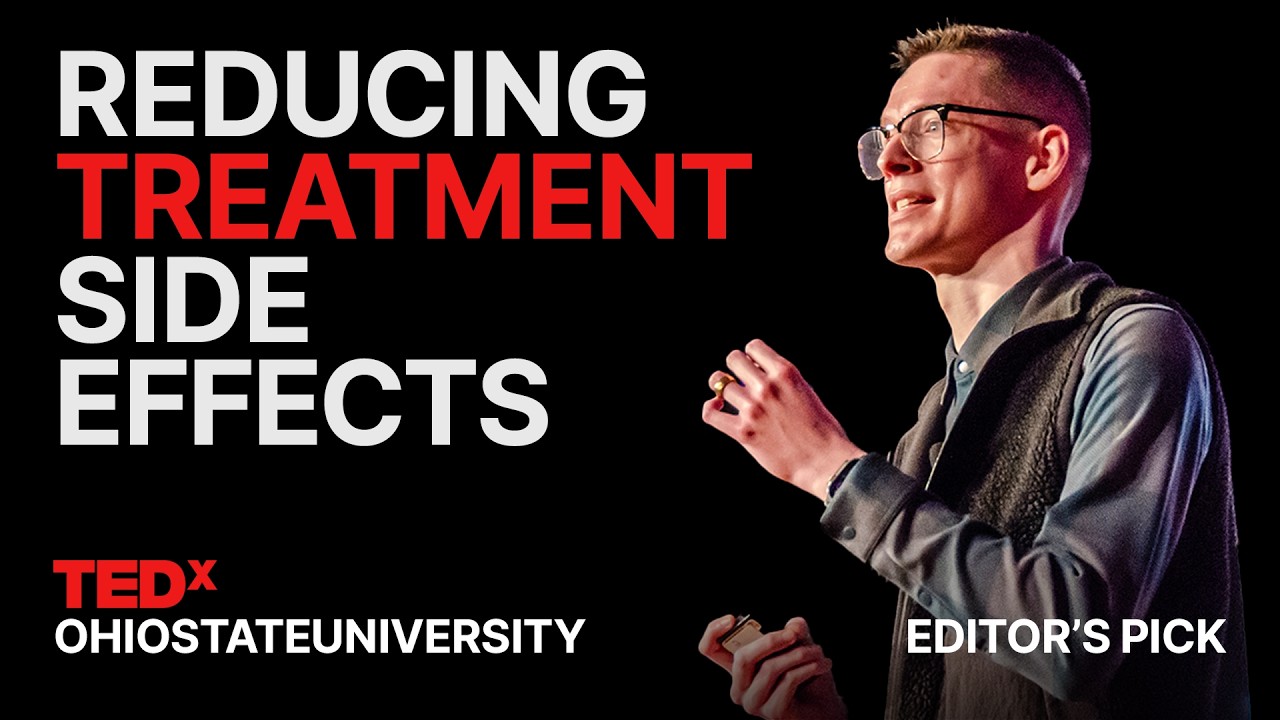 How encrypted immunotherapy could fight cancer | Blaise Kimmel | TEDxOhioStateUniversity
Things we can learn from the video
Press to jump
- 0:16A friend's metastatic cancer returns, and he fears the grueling treatment more than the disease.
- 0:56Doxorubicin, the "Red Devil," is described as controlled poison that erodes quality of life.
- 4:22Three obstacles: cancer spreads, hides by tricking immune cells, and treatments are toxic body-wide.
- 5:27Cytokines work like sound waves that cells hear through receptors on their surface.
- 7:18Infusing cytokines broadly can cause cytokine release syndrome, a dangerous systemic inflammation.
- 10:34The proposal: locked cytokines that unlock only in tumor conditions like low oxygen or specific pH.
The treatment scared him more. That is how Blaise Kimmel describes the phone call that opens his TEDxOhioStateUniversity talk: an old friend's metastatic cancer had returned, and what frightened the friend most was the treatment ahead. "He was afraid of the treatment," Kimmel says.
Kimmel, an assistant professor of chemical and biomolecular engineering, does not soften why. He puts doxorubicin on screen under its nickname, the "Red Devil," and calls chemotherapy "controlled poison at its best." Such drugs can also wipe out the immune cells a patient needs to fight the disease.
His alternative runs through cytokines, the proteins cells use to pass messages. Kimmel compares them to sound waves that a cell "hears" when they bind to its receptors. Infused into the bloodstream, though, a strong immune signal is heard everywhere, and the inflammation can turn into cytokine release syndrome, which he describes as fatal.
So the trick is not a louder signal but a private one. Treating a protein's amino acids as an alphabet, his lab builds new "letters" to make cytokines that travel through the body locked and inert. Only conditions typical of a tumor, such as low oxygen or a particular acidity, unlock them. The "encryption" is protein engineering, not software, and the talk presents a research approach rather than a treatment patients can get today.
The talk reached about 35,000 views in its first 15 hours, a pace TEDx Talks' regular uploads rarely approach on a first day. It arrived alongside another cancer talk on the channel, pediatric oncologist Kyle MacQuarrie's look at childhood cancer, which is moving far more slowly.
Kimmel closes on his own rule for the work: "The goal has to be patient-centric mission." The measure, he argues, is whether a therapy leaves people a life worth having during treatment, and whether it reaches clinics many patients can actually use.
Published on Trari
Where next?


What viewers say
There is so much more we still haven't understood about Sicknesses
But AI will help us
Thanks for great videos@Apex-Industrial-ProcurementSee it on YouTubeMasa depan sangat terasa akan indah dengan adanya orang-orang seperti kamu
@yosuganosoramaduSee it on YouTube
Public comments from the video's page on YouTube
 Is this your channel?For the channel's owners and team: a ready picture, text and badge for your audience
Share the story with your audience. Everything is ready:
For an Instagram story or a WhatsApp status
For a community post or your channel's description
For your website

You may use the picture, the badge, and link it to this story.
- Channel
- TEDx Talks
- Subscribers
- 44,700,000
- Channel views, last 7 days
- 12,522,713
- Channel views, pace per day
- 2,072,820 (on a normal day: 1,864,019)
- Video published
- October 17, 2026
- Video views so far
- 35,519 (less than a day online)
- Video views, pace per day
- 45,504
The numbers
A science talk drawing this kind of first-day audience is unusual for a channel whose regular uploads typically start in the hundreds.
