
Stuckey and Foxx ask what feminism owes mothers
The Free Press debate moves from abortion to caregiving, career expectations and the judgment attached to staying home.
 The Free Press
Story of
Why this story? The video drew 555 comments in its first day, 21 times a normal first day on this channel (27).
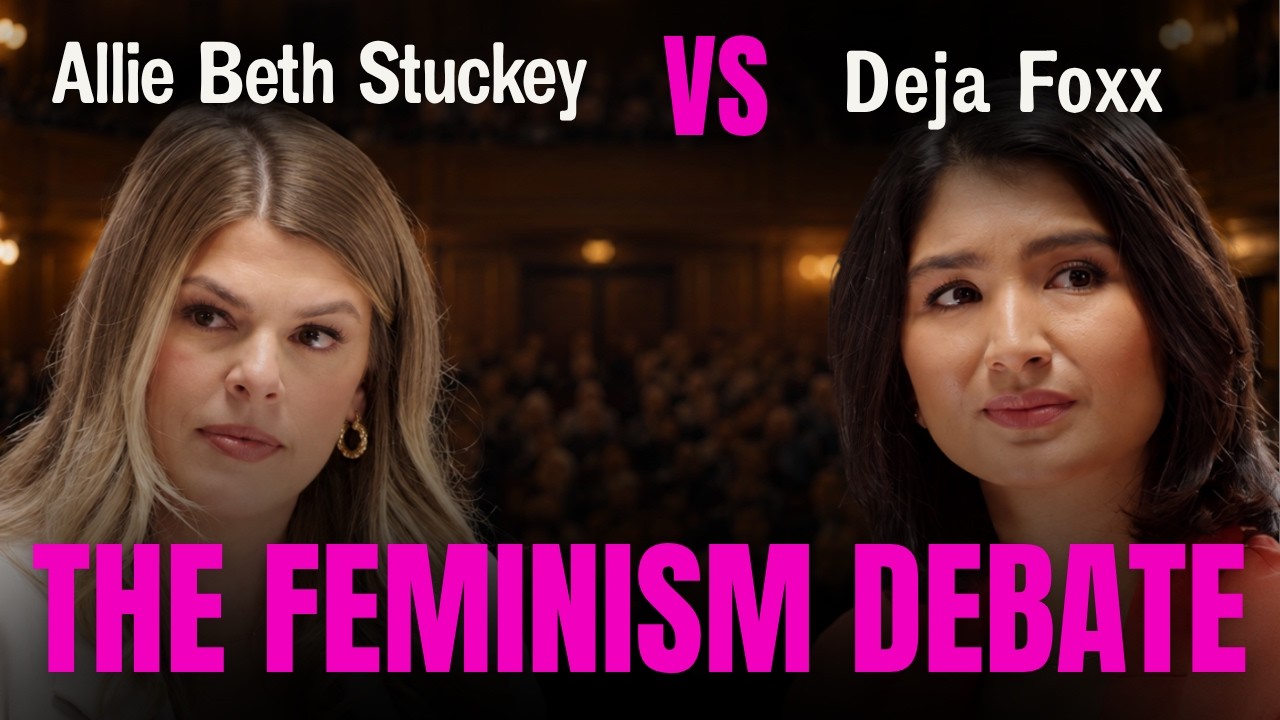 Allie Beth Stuckey and Deja Foxx: Do We Need Feminism?
Things we can learn from the video
Press to jump
- 3:02Foxx argues feminism expanded women's opportunities; Stuckey's opposing assessment begins at 05:19.
- 8:34The abortion discussion contrasts Foxx's case for bodily autonomy with Stuckey's argument for protecting fetal life.
- 21:40Foxx defends caregiving as essential labor and advocates paid family leave.
- 23:51Stuckey says motherhood's biological demands can change career pace and expectations.
- 35:04An audience question asks why stay-at-home mothers face judgment, prompting discussion of choice and moral values.
- 54:20Stuckey argues for sex-based protections, while Foxx makes the case for transgender inclusion.
Can women value motherhood without measuring it against a paycheck? That question gives a practical turn to The Free Press's "Allie Beth Stuckey and Deja Foxx: Do We Need Feminism?", a Nashville debate whose comment section grew far busier than its viewing figures would suggest.
Presented with CBS News as part of Things That Matter, the discussion drew roughly twenty times the channel's usual first-day comments. Views were ordinary for a regular upload. Kelly O'Grady moderates, with audience questions taking the conversation beyond the opening dispute over whether modern feminism has helped or harmed women.
Foxx, a Democratic organizer and digital strategist, argues that caregiving is essential labor and makes the case for paid family leave and stronger support for working families. Stuckey, the conservative commentator behind Relatable, says motherhood brings distinct biological seasons that can change the pace of a career.
Their explanations for the pressures on women differ. Foxx emphasizes childcare costs and economic barriers to starting families. Stuckey questions whether the gains associated with modern feminism have brought greater happiness or fulfillment.
The debate also covers abortion, IVF and transgender inclusion, with sharp differences over bodily autonomy, embryo protection and the boundaries of female-only protections. But some of its most concrete questions come from the audience: must a new mother lower her career expectations, and why are stay-at-home mothers judged for their choice?
At around the thirty-five-minute mark, that last question puts the title's broad argument into everyday terms: what freedom means when someone else disapproves of how a woman uses it.
Published on Trari
Where next?


 Is this your channel?For the channel's owners and team: a ready picture, text and badge for your audience
Share the story with your audience. Everything is ready:
For an Instagram story or a WhatsApp status
For a community post or your channel's description
For your website

You may use the picture, the badge, and link it to this story.
- Channel
- The Free Press
- Subscribers
- 479,000 ▲ 2,000 this week
- Channel views, last 7 days
- 961,904
- Channel views, pace per day
- 244,238 (on a normal day: 97,615)
- Video published
- October 14, 2026
- Video views so far
- 46,937 (2 days online)
- Video views, pace per day
- 22,700 (on a normal day: 30,421)
The numbers
The unusual activity was in the comments, not the views. The debate's opening-day discussion was far larger than the channel's usual response to regular videos.

💡 Test your knowledge
Which podcast does Allie Beth Stuckey host?
Stuckey hosts Relatable, the podcast identified in the debate's introduction.