
Rhett Marques won't explain his redistricting vote, then credits the map
Oliver Laughland's Alabama stop for Anywhere but Washington runs from a Montgomery campaign launch to Lowndes County, where sewage still runs untreated.
 The Guardian
Story of
Why this story? The video opened at a pace of 101,693 views a day, 20 times a normal first day on this channel (5,012).
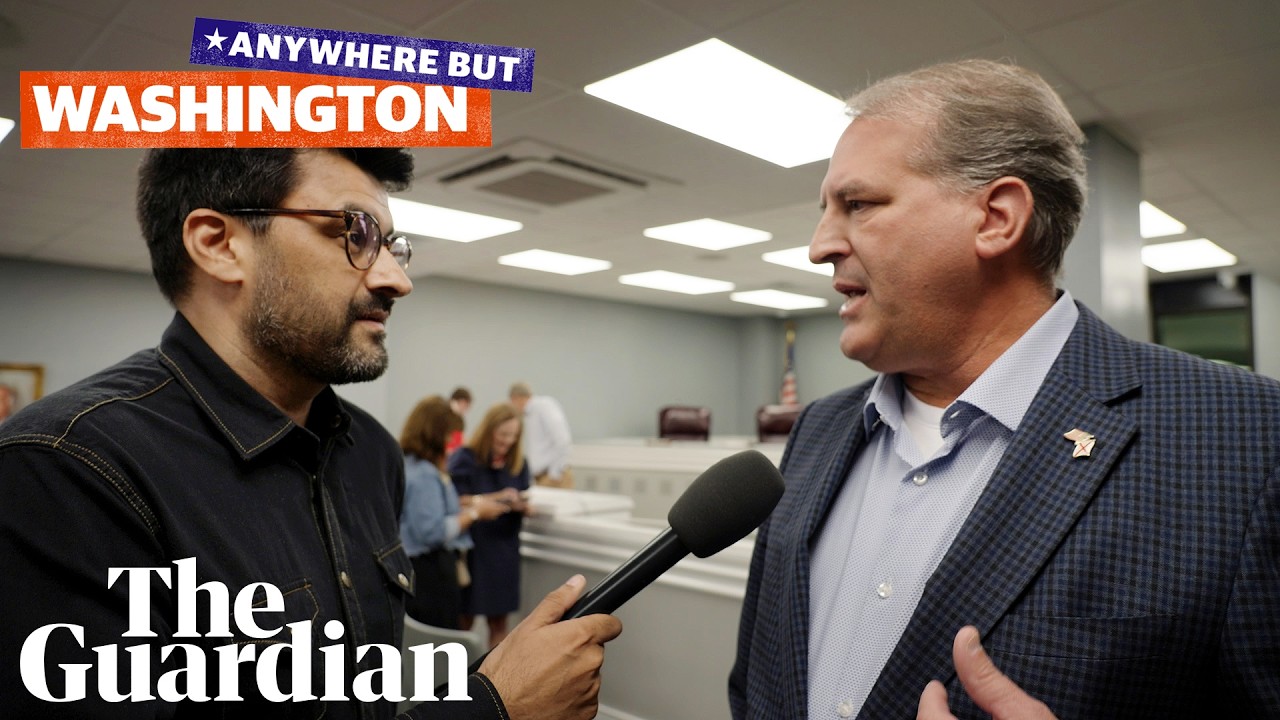 How Alabama's Republicans are disenfranchising Black voters | Anywhere but Washington
Things we can learn from the video
Press to jump
- 0:00Laughland asks Rhett Marques about redistricting in an elevator; Marques gives no comment.
- 1:00Court decisions on the Voting Rights Act and the changes to Alabama's congressional map, explained.
- 1:32At Shomari Figures' Montgomery launch, Black voters say the new map dilutes their representation.
- 5:45Conservative voters in Houston County discuss inflation, immigration and race.
- 7:22Marques says Republicans have the advantage because of redistricting, then declines questions about his abstention.
- 9:40Catherine Flowers shows the sewage and wastewater problems Black rural residents face in Lowndes County.
"I have no comment on it," Rhett Marques tells Oliver Laughland in an elevator, in the opening seconds of the Guardian's newest Anywhere but Washington report. The subject is redistricting, and Marques, the Republican candidate in Alabama's second congressional district, would rather not discuss why he abstained when the new map came to a vote.
A few minutes later, at a Republican gathering in Houston County, he is less shy. "We have the advantage in this race because of redistricting," he tells the room. When Laughland presses him afterward, Marques calls it "a set-up question" and drives away.
The district is held by Democrat Shomari Figures, who won it in 2024 after the Supreme Court's Allen v. Milligan ruling led to a map giving Black voters a second real chance at a seat. The report, filmed by Laughland and Tom Silverstone, traces how recent court decisions and the newly drawn lines changed that. At Figures' campaign launch in Montgomery, one voter puts it bluntly: "We know it was extremely racist what was done." Houston County, now part of the district, offers a different view, with conservative voters talking about inflation and immigration.
The last stretch leaves the campaign behind. In Lowndes County, which lies along the 1965 Selma-to-Montgomery march route, environmental activist Catherine Flowers shows Laughland homes still without working sewage systems. The description notes that federal help ended under Donald Trump, whose administration called it "illegal DEI". Flowers widens the frame: "This is a rural America problem."
Posted less than a day ago, the film has drawn close to 90,000 views, while the series' West Virginia installments earlier this month drew a few thousand each. Comments are arriving about five times faster than on a usual first day, and much of the talk centers on the candidate's exit.
Published on Trari
Where next?


 Is this your channel?For the channel's owners and team: a ready picture, text and badge for your audience
Share the story with your audience. Everything is ready:
For an Instagram story or a WhatsApp status
For a community post or your channel's description
For your website

You may use the picture, the badge, and link it to this story.
- Channel
- The Guardian
- Subscribers
- 2,640,000
- Channel views, last 7 days
- 3,731,294
- Channel views, pace per day
- 801,744 (on a normal day: 329,037)
- Video published
- October 22, 2026
- Video views so far
- 88,970 (less than a day online)
- Video views, pace per day
- 101,693
The numbers
The Alabama report's first hours stand well apart from the channel's usual start for a new video.

💡 Test your knowledge
Which Selma bridge became the site of 'Bloody Sunday' in March 1965?
Marchers setting out from Selma toward Montgomery were attacked by state troopers on the Edmund Pettus Bridge on March 7, 1965.