
Catherine Heymans finds possibility in BBC Earth Science's cosmic unknowns
A Science's Greatest Mysteries excerpt joins planetary choices and Tutankhamun's meteorite-linked dagger in a three-upload week.
 BBC Earth Science
Story of
Why this story? The channel's weekly summary: what went up this week, what is drawing views now, and where the channel stands among similar channels.
 Is this Unsettling Fact Science’s ‘Epic Fail’? | BBC Earth Science
Understanding only a small fraction of the universe might sound discouraging. Professor Catherine Heymans sees a rather different prospect: an enormous amount left to discover.
The Astronomer Royal for Scotland features in "Is this Unsettling Fact Science's 'Epic Fail'? | BBC Earth Science", the channel's most-watched new upload, with roughly 172,000 views. Drawn from Science's Greatest Mysteries, the excerpt introduces her work refining our picture of dark matter and her view that an incomplete understanding of the cosmos is an exciting challenge, not a failure.
That distinction has become the comment section's main conversation, too. Viewers push back on the title's failure framing, arguing that revising explanations is what science does. One finds an unexpectedly earthy resemblance between the dark-matter map and the branching fungal networks beneath plant roots.
The other new uploads bring the scale back toward home. "5 ways to protect the planet 🌍" considers everyday actions alongside the larger roles of governments and businesses. "The Meteorite Hidden in Tutankhamun's Tomb | BBC Earth Science" follows scientists using X-ray technology to investigate the origin of the iron in the pharaoh's dagger.
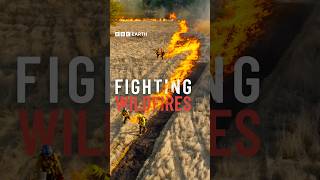
The channel added about 1.7 million views over the week while its subscriber count stayed unchanged. Beyond the Observable Universe and Chris Boden had larger viewing weeks among nearby science channels. BBC Earth Science's daily viewing is nevertheless above its usual level, with the older fire-breathing wildfire robot upload supplying its strongest daily momentum.
Published on Trari
Where next?


What viewers say
Science doesn't fail, it continues to learn. That's kind of the whole point.
@havableSee it on YouTubeAt my advanced age even the questions are exciting. They consider concepts which I once had never dreamt of being possible.
@peterrollinsonlorimerSee it on YouTubeThe map of dark matter reminds me a bit of the fungal or mycorrhizal network that’s underground connecting all the plant roots
@csmc5145See it on YouTube
5 more comments
Considering how long humans have been around, and that we are among the few who already understand 5%, I would absolutely not call that an 'epic fail'.
@DannyKlimtSee it on YouTube"Along with 'Antimatter,' and 'Dark Matter,' we've recent;y discovered the existence of 'Doesn't Matter,' which appears to have no effect on the universe whatsoever."
@kenjones7719See it on YouTubeI’m open to the fact that we will not ever find out ✌🏼
@oingplaSee it on YouTubewe need so... so very much more data.....
@JeandreTruterSee it on YouTubeWell, we're still way ahead of what Copernicus knew, so let's keep digging and see where we are at in 500 years.
@lesliepaulkovacs6442See it on YouTube
Public comments from the video's page on YouTube
 Is this your channel?For the channel's owners and team: a ready picture, text and badge for your audience
Share the story with your audience. Everything is ready:
For an Instagram story or a WhatsApp status
For a community post or your channel's description
For your website

You may use the picture, the badge, and link it to this story.
The videos drawing views on BBC Earth Science right now


- Channel
- BBC Earth Science
- Subscribers
- 1,820,000
- Channel views, last 7 days
- 1,697,076
- Videos published this week
- 3
- Video published
- October 16, 2026
- Video views so far
- 171,833
- Views on its first day
- 62,977
The numbers
Here is BBC Earth Science's week in views and subscribers.

💡 Test your knowledge
Which title does Catherine Heymans hold?
The video's description identifies Catherine Heymans as Astronomer Royal for Scotland.