
"Sunlight never stands still," says Cosmoknowledge, and viewers ask who is moving
A 30-second animation follows the overhead Sun from tropic to tropic, and its comment section has turned into a debate over how to draw the seasons.
 Cosmoknowledge
Story of
Why this story? The video opened at a pace of 727,544 views a day, 65 times a normal first day on this channel (11,269).
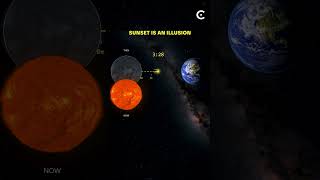
 Sunlight shifts across Earth as the seasons change.
Cosmoknowledge has packed a whole year into about half a minute. Its new Short, "Sunlight shifts across Earth as the seasons change.", starts at the March equinox with the Sun directly over the equator. It then follows that overhead spot north to 23.4 degrees at the June solstice, back to the equator in September, down to 23.4 degrees south in December and home again by March. A single line sits above it the whole time: "Sunlight never stands still."
Those two latitudes are the Tropic of Cancer and the Tropic of Capricorn, the boundaries of where the Sun can ever be straight overhead. The cause is Earth's axis, tipped about 23.4 degrees, which keeps the same orientation in space as the planet travels around the Sun.
That tilt is what the comments are about. The animation does show a tilted, rotating Earth, but many viewers say the Sun appears to slide up and down beside it. They worry people will take that motion literally, when it is Earth's position in its orbit that changes, not the Sun's height. Others add their own detail, such as how daylight at the equator still shifts by a few minutes across the year, or suggest small fixes to make the model sharper.
The Short has passed 850,000 views in a day and a half, far beyond a usual start for the channel's Shorts. It is the second sunlight story in a week, after the sunset clip we reported here. A supersonic jet followed the next day: by the time you hear one, the newer Short explains, it has already gone.
Published on Trari
Where next?

What viewers say
I wish I had known about how many fields there are in geology and astronomy when I was younger. I grew up in an area with hundreds of caves and interesting geological formation and never thought about how interesting it really was.
@DieselslackerSee it on YouTubeEven at the equator, the daylight changes, although it reaches 12 hours and 6 minutes on the equinox and 12 hours and 7 minutes at the solstices.
@StellarGuy-u1eSee it on YouTubeIsn't this due to the earth's tilt and not the sun actually moving? The sun does not move in every season, the earth does.
@ACunique1See it on YouTube
3 more comments
Now tilt the earth during solstices/ equinox and you have an accurate model
@DavidFisher-w3nSee it on YouTubei like the picture it’s cool indeed
@gaylenemorley916See it on YouTubeI like this song, I want it.
Does anyone know the song's name, please?@MansesHansesSee it on YouTube
Public comments from the video's page on YouTube
 Is this your channel?For the channel's owners and team: a ready picture, text and badge for your audience
Share the story with your audience. Everything is ready:
For an Instagram story or a WhatsApp status
For a community post or your channel's description
For your website

You may use the picture, the badge, and link it to this story.
- Channel
- Cosmoknowledge
- Subscribers
- 825,000 ▲ 2,000 this week
- Channel views, last 7 days
- 1,880,104
- Channel views, pace per day
- 385,303 (on a normal day: 265,411)
- Video published
- October 10, 2026
- Video views so far
- 846,092 (2 days online)
- Video views, pace per day
- 727,544
The numbers
The figures show a Short far outrunning the channel's usual first day, on top of a library that already draws a large daily audience.

💡 Test your knowledge
In which month is Earth closest to the Sun?
Earth reaches perihelion in early January, during the Northern Hemisphere's winter, which shows that the seasons come from the tilt and not from distance.